русский
 Français
 한국어
한국어 عربى
عربى Español
 中文简体
中文简体Best Steam Irons 2026: Wattage, Steam Output and Soleplate Buying Guide
Admin 2026-09-24Content
- 1 Steam Output Matters More Than Wattage
- 2 Heat-Up Time Is Comfort, Recovery Time Is Results
- 3 Tank Size, Weight, and Continuous Steaming
- 4 Flat Soleplate or Two in One Rotatable Design
- 5 Soleplate and Panel Materials
- 6 Specification Bands at a Glance
- 7 Buying for a Household or for a Retail Program
- 8 Maintenance That Extends Service Life
- 9 The Bottom Line
If you iron two shirts a week and your tap water is hard, a 1,500W iron with a stainless steel soleplate and a 250 ml tank will serve you better than a 2,000W model with a 90 ml tank. That is the short answer, and it is worth stating first because most shopping lists for steam irons are built around wattage alone. The numbers that actually decide whether an iron feels good in daily use are steam output in grams per minute, tank volume balanced against the weight in your hand, and recovery time after each burst of steam.
This guide works through those numbers in the order they affect a purchase, using specification bands drawn from steam iron and garment steamer production for export markets. The same three numbers drive a single household purchase and a retail program of several thousand units, so the checklist at the end works for both.
Steam Output Matters More Than Wattage
Wattage describes how much electricity the element draws, not how much steam reaches the fabric. Two irons rated at 1,600W can differ by 15 grams per minute in real output, and that gap shows up directly in the number of passes a linen shirt needs. Output depends on the pump or gravity feed, the size of the vaporisation chamber, and how the steam holes are arranged in the soleplate. A single row of holes concentrates steam along a narrow line, while a double row spreads it across a wider band and reduces passes on large flat items such as curtains and tablecloths.
Steam output by iron class, grams per minute
The chart groups steam irons by class rather than by brand, because the class sets the ceiling on what the tool can do. Compact travel irons usually deliver 10 to 15 grams of steam per minute, enough to relax a collar but not enough to press a linen tablecloth. Everyday irons between 1,400W and 1,600W typically sit at 20 to 30 grams per minute, which covers most household laundry. High output models at 1,700W and above reach 35 to 45 grams per minute and cut the number of passes needed on heavy cotton. Two in one rotatable designs land in the middle at 25 to 35 grams per minute, trading peak output for flexibility.
Burst steam, sometimes listed as a shot of steam, is a separate figure from continuous output. A burst of 100 to 150 grams is typical on mid range irons and is used for a few seconds at a time on stubborn creases. If a specification sheet lists only one steam number, ask which one it is, because continuous output and burst output are not interchangeable.
Heat-Up Time Is Comfort, Recovery Time Is Results
Heat-up time from cold is the figure buyers check first, and it is the least useful one. Most current irons reach working temperature in 30 to 45 seconds, and that difference almost never changes the outcome of a session. Recovery time after a steam burst is different, because it decides whether you can keep moving or must pause and wait.
Soleplate temperature recovery after a five second steam burst
1,500W element2,000W element
A steam iron loses temperature the moment it releases a burst of steam, and recovery is what sets the rhythm of a session. The chart tracks soleplate temperature for 30 seconds after a five second burst, comparing a 1,500W unit with a 2,000W unit. Both start at about 185 degrees Celsius. The 1,500W model falls to roughly 163 degrees and needs about 20 seconds to climb back to its starting point, while the 2,000W model dips less and recovers in about 15 seconds. Faster recovery also removes the temptation to hold the iron still on the fabric, which is the usual cause of shine marks and scorching.
Tank Size, Weight, and Continuous Steaming
A large tank is only an advantage if you can still control the iron comfortably. Water weighs about one gram per millilitre, so a 350 ml tank adds roughly 350 grams to the body of the appliance before the element, the soleplate and the housing are counted. That is why travel models stay near 90 ml to 150 ml while household models move toward 250 ml and above.
Tank size and continuous steaming time
Tank volume only means something when it is read together with steam output. The chart shows how long a typical iron can steam continuously at its standard setting across four common tank sizes. A 90 ml tank supports about 4 minutes of work, which is roughly one shirt. A 150 ml tank doubles that to about 7 minutes, and a 250 ml tank reaches roughly 12 minutes, enough for a small load of laundry. A 350 ml tank runs for about 18 minutes without a refill, while adding roughly 350 grams of weight to the appliance. The sensible rule is to take the largest tank you can still hold comfortably for a full session.
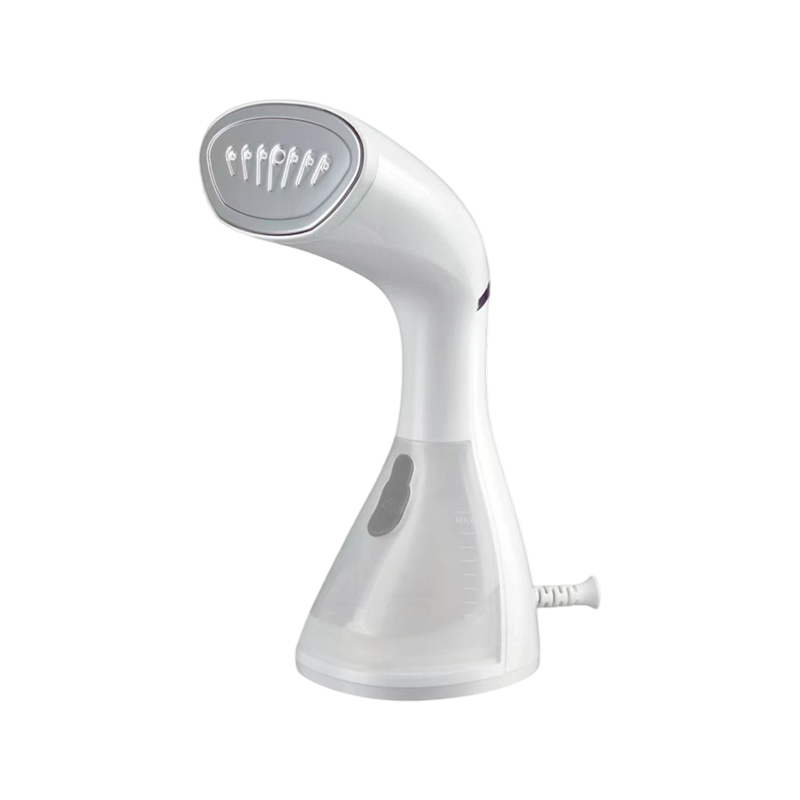
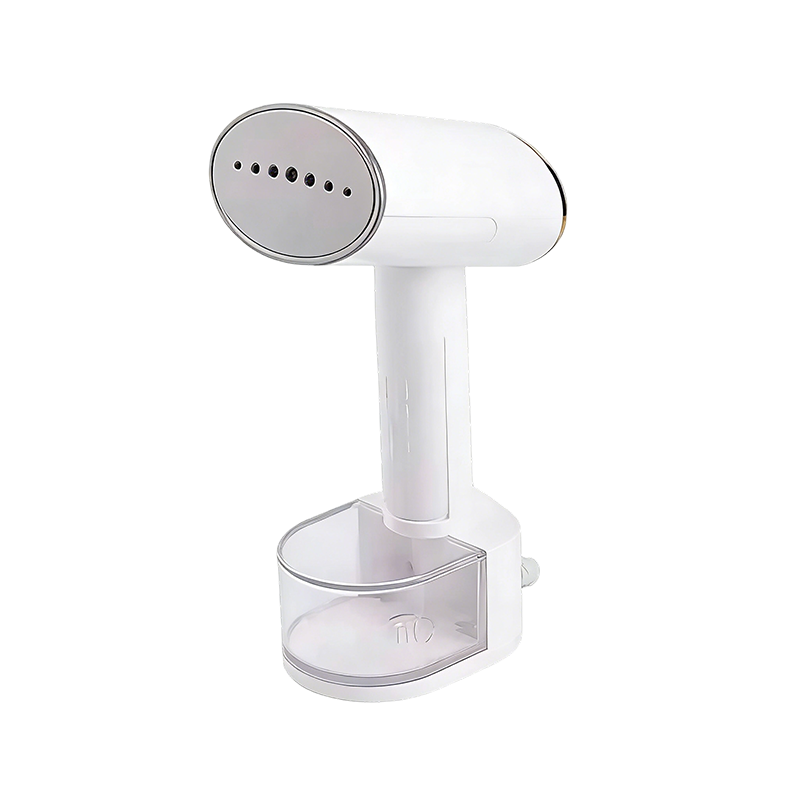 Dry, Steam Ironing Aluminium Panel Portable White Garment Steamer 250ML Capacity MW-810This steamer is made of aluminium panel, which can be folded flat. It features a detachable water tank and a large aluminum panel with a non-stick soleplate or ceramic...View Product →
For most buyers the tank decision comes down to whether the user irons in one long session or in short bursts. A 250 ml tank with a dry and steam setting covers a weekly load without a refill, while a 350 ml tank is aimed at households that also press bedding and curtains.
Flat Soleplate or Two in One Rotatable Design
The shape of the iron decides which garments it handles well, and the two in one rotatable format has moved from a novelty to a mainstream option. In this design the head rotates relative to the handle, so the same appliance presses flat on a board and steams vertically on a hanger. Rotation also changes the wrist angle, which reduces strain during long vertical sessions.
Flat steam iron compared with a two in one rotatable design
Conventional flat steam ironTwo in one rotatable design
The radar chart compares a conventional flat steam iron with a two in one rotatable model across five criteria. The flat iron scores highest on steam coverage, because a full size soleplate spreads heat over a wide contact area in a single pass. The rotatable design wins clearly on vertical steaming, delicate fabric safety and portability, since the head can be turned and used above the garment without pressing down. Limescale tolerance is closer between the two, with a modest advantage going to the shorter steam path of the rotatable head. Neither shape is universally better, so the deciding question is whether your wardrobe is mostly shirts that need pressing or mostly knits and hanging garments that need refreshing.
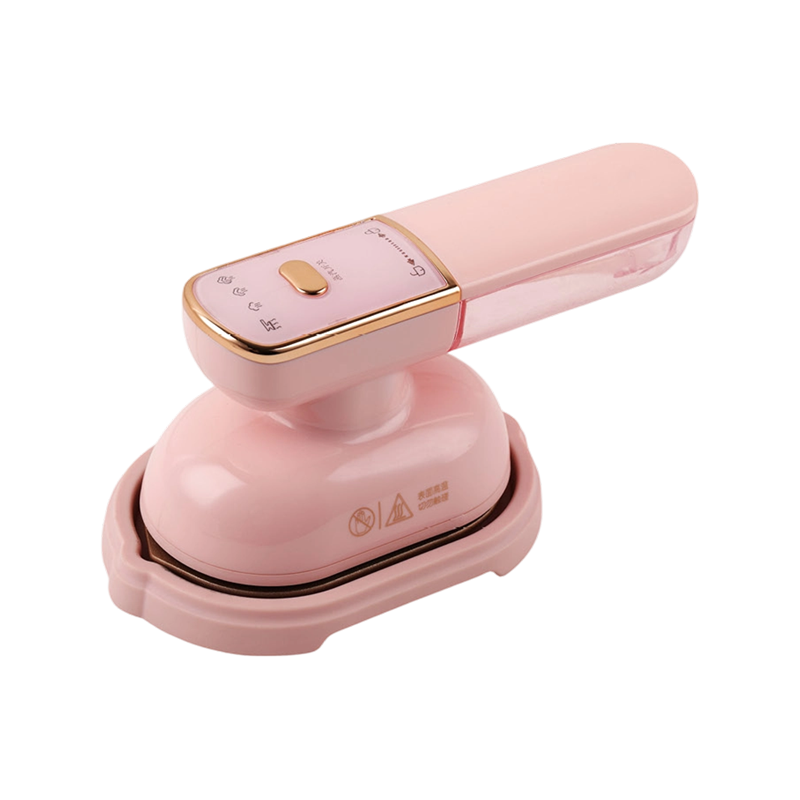
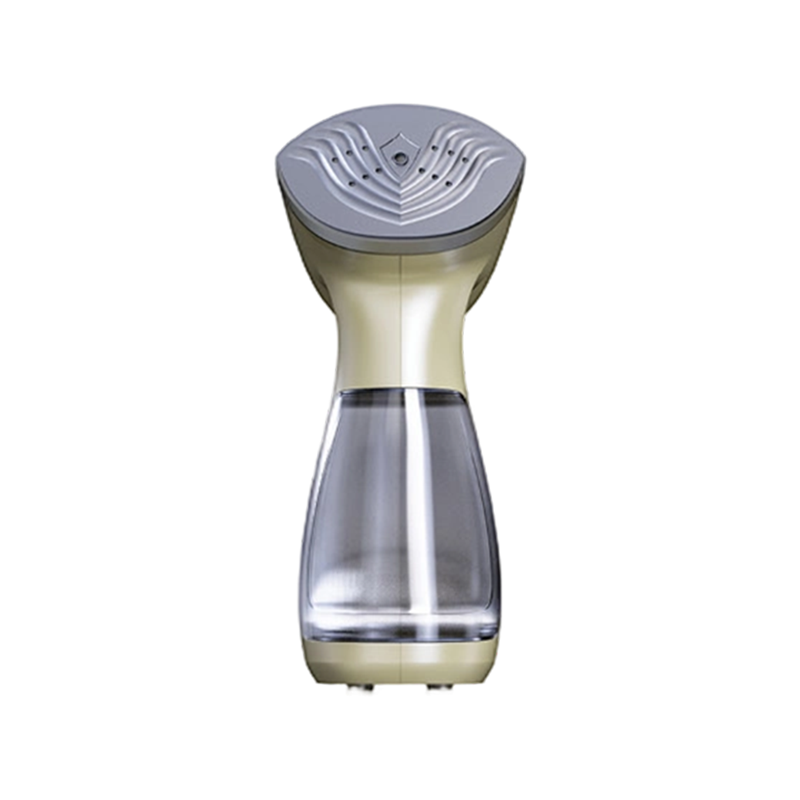 Multiple Ironing Modes Garment Steamer MW-835Multi-Mode Garment Steamer with Knob ControlView Product →
Soleplate and Panel Materials
Four materials appear most often on specification sheets, and each trades glide against durability in a different way.
- Stainless steel: hardest wearing, resists scratching from zips and buttons, and holds heat evenly. It is heavier and warms up slightly more slowly.
- Ceramic coated aluminium: very smooth glide and quick warm-up, but the coating can chip if the iron is dropped or dragged across a zip.
- Non-stick coated aluminium: light in the hand and inexpensive to produce, with the shortest working life because the coating thins over repeated heating cycles.
- Titanium coated alloys: a good compromise on weight and scratch resistance, usually at a higher unit cost.
The choice also affects maintenance, because limescale shows up more clearly on a dark non-stick surface than on brushed steel, and a rough plate grabs at delicate fabrics. A closer look at panel materials for steam appliances covers the same trade-offs from a manufacturing angle.
Specification Bands at a Glance
| Class | Wattage | Steam output | Tank | Best suited to |
|---|---|---|---|---|
| Compact travel | 1,000W to 1,200W | 10 to 15 g per minute | 90 to 150 ml | Travel, touch ups, single garments |
| Everyday household | 1,400W to 1,600W | 20 to 30 g per minute | 200 to 250 ml | Shirts, trousers, weekly laundry |
| High output | 1,700W to 2,000W | 35 to 45 g per minute | 300 to 350 ml | Linen, bedding, curtains, long sessions |
| Two in one rotatable | 1,500W to 1,800W | 25 to 35 g per minute | 150 to 250 ml | Mixed wardrobes, vertical steaming, delicate fabrics |
Buying for a Household or for a Retail Program
The same three numbers apply when you buy by the container rather than by the unit, but the weighting changes. A household buyer can accept a 90 ml tank for travel; a retail program needs a clear specification ladder so that entry, mid and premium models do not overlap in price and features.
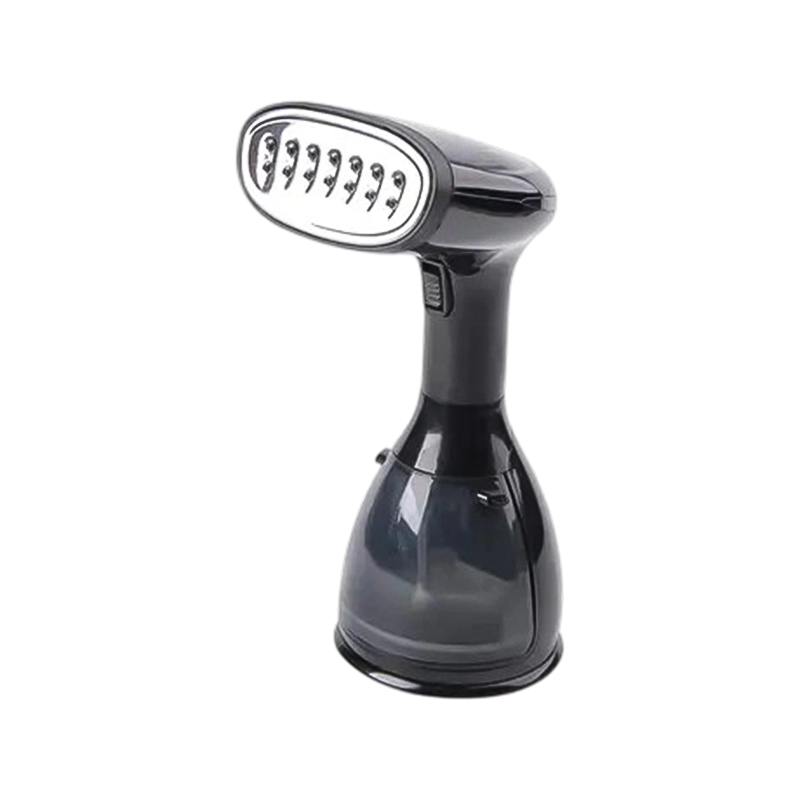
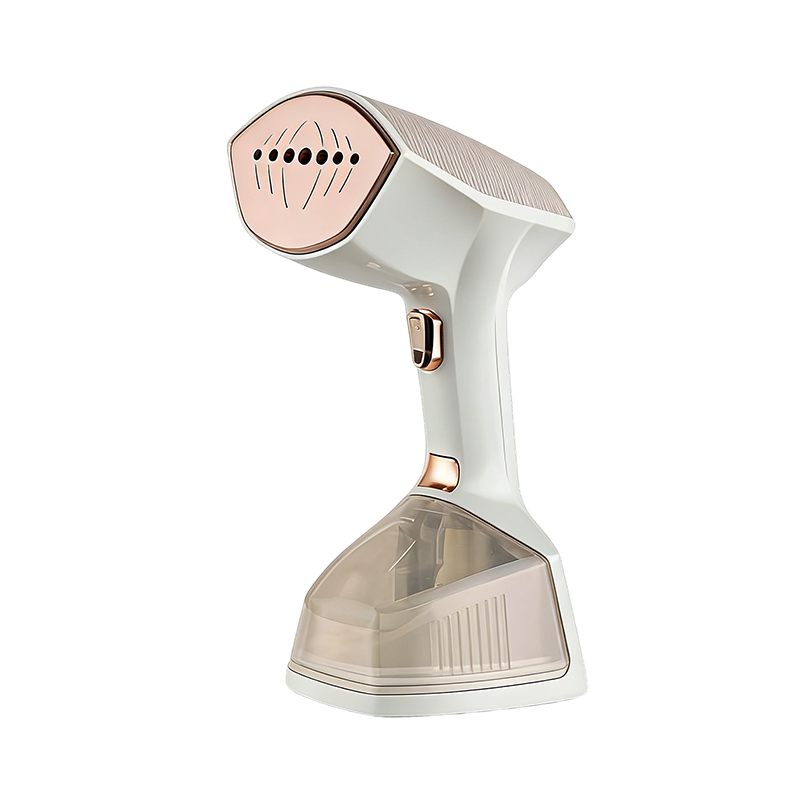 1600W/2000W 350ML Capacity Handleheld Portable Garment Steamer MW-816The MW-816 Garment Steamer is an ideal device for saving time and money. The product comes with a water tank capacity of 350ml, power: 22O-240V 50/60Hz 1600W/2000W, st...View Product →
For export programs, three details decide whether a shipment clears customs and reaches the shelf without rework. Voltage and plug type must match the destination, which is why dual voltage designs serve travel ranges while fixed voltage designs serve domestic ranges. Certification must cover the destination market, and the usual sets are CE, GS, CB, ROHS, ERP and PAHs for Europe, supported by ISO 9001 and BSCI documentation at factory level. Packaging and manual language must match the same market, because a correct appliance with a single language manual will fail a retail audit. A manufacturer that builds both garment steamers and steam irons under one roof, such as our production base in Yuyao, can usually supply a matched range from a single source, which keeps the compliance file and the spare parts list short.
Maintenance That Extends Service Life
- Use distilled or filtered water where the local supply is hard, and follow the manual on whether tap water is acceptable.
- Empty the tank after every session, because standing water is the main cause of mineral build up and of brown marks on light fabrics.
- Run the self-clean or descale cycle monthly in hard water areas and quarterly in soft water areas.
- Wipe the soleplate while it is warm and unplugged, using a soft cloth, since abrasive pads strip the coating that provides glide.
- Store the iron upright and let it cool completely, so residual moisture does not sit against the plate.
The Bottom Line
Rank steam irons by steam output, recovery time and tank size, then check the soleplate material against the fabrics you actually own. A 1,500W iron with a stainless steel plate and a 250 ml tank handles an ordinary household wardrobe without drama, while a two in one rotatable design is the better answer if most of your care routine happens on a hanger. Whichever route you take, confirm that the steam figure quoted is continuous output rather than burst output, and confirm that the tank is one you can hold comfortably for the length of a full session.
For exclusive deals and latest offers, sign up by entering your email address below.