русский
 Français
 한국어
한국어 عربى
عربى Español
 中文简体
中文简体High Pressure Steam Iron: Pressure Ratings, Steam Output and Sourcing Guide
Admin 2026-09-25Content
- 1 What the Pressure Number Actually Tells You
- 2 Pressure Classes Side by Side
- 3 How Fast Pressurised Steam Arrives
- 4 Power, Tank Size and Realistic Runtime
- 5 Matching the Machine to the Job
- 6 Specifications to Compare Before You Ask for a Quote
- 7 OEM, Certification and Export Details That Move the Price
- 8 Keeping a Pressurised Iron Working
A high pressure steam iron is not simply a stronger version of the iron in a hotel cupboard. It is a different machine. A sealed boiler or a pump pushes steam through the soleplate at roughly 3 to 6 bar, while an ordinary steam iron lets steam drift out at close to 1 bar. That single design decision controls how quickly a crease relaxes, how long you can work before a refill, and how much a container of units should cost you.
The confusion starts with the label. Suppliers apply the phrase to a 1500 W handheld garment steamer that runs at almost no pressure, and also to a 2400 W steam station that genuinely holds 6 bar. A buyer who compares only the price will find the cheaper offer looks like a bargain until the first quality claim arrives. The sections below set out what the number means, what it costs, and what to verify before you commit to an order.
What the Pressure Number Actually Tells You
Pressure and steam output are separate specifications, and mixing them up is the most common sourcing error. Pressure, measured in bar, describes how hard the steam leaves the soleplate. Output, measured in grams per minute, describes how much steam leaves it. A machine can hold high pressure and still deliver a modest 30 grams per minute, and the reverse happens too.
Pressure matters because it drives steam into the fibres instead of across them. At 1 bar, steam wets the surface and needs heat and time to work. At 4 bar and above, steam reaches the inner layers of cotton, linen and wool blends within a second or two, which is why a heavy shirt collar can be finished in one pass instead of three.
Output matters for speed at volume. A household session of six shirts needs perhaps 40 grams per minute. A small tailor shop running thirty garments an hour needs a machine that sustains 80 grams per minute without dropping. The table below maps pressure bands to output figures and to the jobs they suit.
| Working pressure | Typical steam output | Where it works well | The trade off |
|---|---|---|---|
| Under 1 bar | 15 to 25 g per minute | Quick touch ups on light shirts at home | Frequent refills and repeat passes on heavy creases |
| 1 to 2 bar | 20 to 30 g per minute | Travel, single garments, delicate fabrics | Small tanks and steam that stays on the surface |
| 3 to 4 bar | 40 to 60 g per minute | Daily family ironing, thick cotton and linen | Heavier unit and regular descaling |
| 5 to 6 bar | 80 to 120 g per minute | Large households, small tailors, guest houses | Higher price and more bench space |
| Above 6 bar | 120 g per minute and up | Laundries, hotels, garment factories | Fixed installation and a trained operator |
Pressure Classes Side by Side
Placing the common device types on one scale makes the price differences easier to justify to a buying committee.
The chart puts five device classes on one pressure scale, from a handheld garment steamer at around 0.5 bar to a commercial boiler system at 8 bar. The gap between the first two bars is small, which explains why a traveller rarely notices much difference between a gravity fed steam iron and a compact handheld unit. The step from 1 bar to 3 bar is where ironing behaviour changes, because steam begins to penetrate the fabric rather than sit on top of it. The largest single jump is between 3 bar and 6 bar, where a domestic high pressure steam iron becomes a steam station with a separate boiler and a much larger reservoir. Systems above 6 bar seldom appear in a home, since they require fixed plumbing and an operator who understands the pressure gauge. When a quotation arrives, place the quoted band on this scale first, and only then start comparing prices.
How Fast Pressurised Steam Arrives
Pressure also decides how quickly a machine reaches full output after switch on, and that ramp up is what most buyers actually feel in daily use.
The two curves share a starting point at zero seconds and then separate almost immediately. The gravity fed iron climbs slowly, reaching about 18 grams per minute close to the 45 second mark, and then drifts down slightly as the heating element cycles. The pressurised machine passes 20 grams per minute inside the first 15 seconds and settles at roughly 44 grams per minute within a minute. That difference of two and a half times is the reason a pressurised unit finishes a shirt in one pass while an ordinary iron needs two or three. It also explains why cheap high pressure claims fail in field tests. If the boiler is undersized, the curve peaks early and then falls away after four or five garments, which is exactly the moment a customer notices. Buyers should therefore ask for a sustained output figure taken after the first minute, not a peak value printed on a gift box.
Power, Tank Size and Realistic Runtime
Runtime is a product of two numbers: how much water the tank holds and how much steam the boiler consumes each minute. A large tank bolted to a weak heater gives the same result as a small tank on a strong one.
6 min
10 min
15 min
22 min
55 min
90 min
The columns show how quickly capacity turns into working time once steam output rises. A 90 ml travel tank empties in roughly six minutes, which is enough for one shirt or a jacket but not for a family wash day. Moving to a 350 ml reservoir nearly quadruples that figure, and it is the point where a handheld unit starts to compete with a small steam station. Above one litre the runtime crosses the fifty minute mark, which is what a guest house or a small tailoring business needs to process a full rail of garments without stopping. The curve is not perfectly linear because larger boilers usually run at higher output, so they consume water faster per minute even though they last longer overall. When you specify a product for a client, match the tank to the longest uninterrupted session that client expects, not to the average session. A buyer who orders a 250 ml model for hotel laundry work will be disappointed within a week.
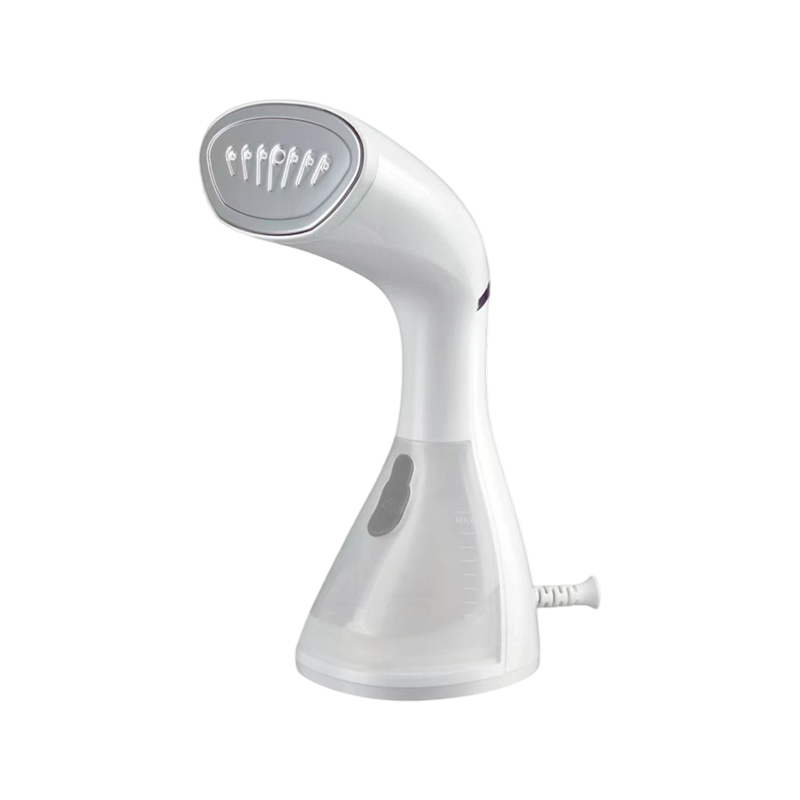
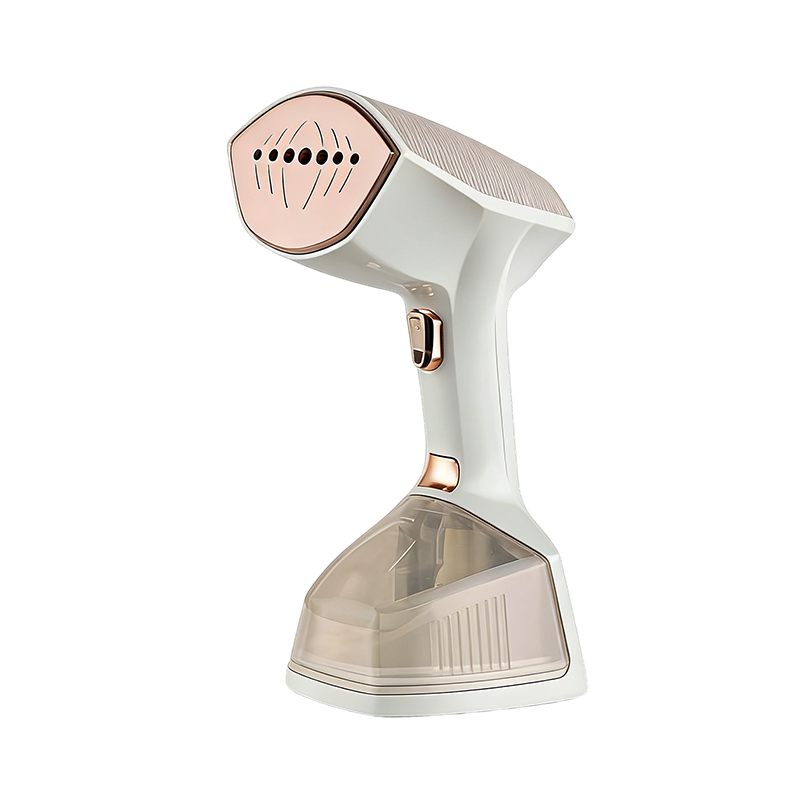 1600W/2000W 350ML Capacity Handleheld Portable Garment Steamer MW-816The MW-816 Garment Steamer is an ideal device for saving time and money. The product comes with a water tank capacity of 350ml, power: 22O-240V 50/60Hz 1600W/2000W, st...View Product →
Matching the Machine to the Job
Buyers often assume that more pressure is always better. The radar comparison below shows where a handheld garment steamer still wins, and why a mixed product portfolio usually sells better than a single flagship model.
The teal shape covers nearly the whole pentagon, which shows that a high pressure steam iron scores well on pressure, steam output, tank capacity and runtime at the same time. The grey shape stretches outward on the portability axis instead, and that single spike is why handheld models keep selling alongside much more powerful machines. A buyer who only reads the pressure figure will miss the fact that portability can be worth more than power to a travelling salesperson or a cabin crew member. The overlap in the middle shows that the two families are not direct substitutes. Retailers generally earn more from carrying both, because each shape answers a different customer complaint. Use this profile when you write your own product descriptions, and be explicit about the axis where the model is weak, so returns stay low.
Specifications to Compare Before You Ask for a Quote
Two suppliers can both describe their product as a high pressure steam iron and still be selling very different machines. Ask for the following points in writing and compare them line by line before you discuss price.
- Working pressure in bar, stated as a working range rather than a peak figure.
- Sustained steam output in grams per minute, measured after the first minute of use.
- Heat up time in seconds, from a cold start to steady steam.
- Tank capacity in millilitres, and whether the tank can be topped up while the unit is running.
- Number of steam levels and how they are selected, from a mechanical button to an LCD or touch panel.
- Panel material, since stainless steel and aluminium behave differently on synthetic fabrics.
- Steam hole layout, single row or double row, which changes how wide a band of fabric one pass covers.
- Voltage options, because a dual voltage design can replace two separate stock keeping units.
- Certificates held by the exact model, together with the report numbers behind them.
- Spare parts availability, especially seals, tanks, valves and heating elements.
If a supplier cannot provide a sustained output figure, treat the pressure claim as marketing. In sample testing, a well sealed low pressure unit often beats a poorly sealed high pressure one on real garments. For background on where the two families diverge in daily use, this note on how handheld steamers compare with traditional irons is a useful starting point.
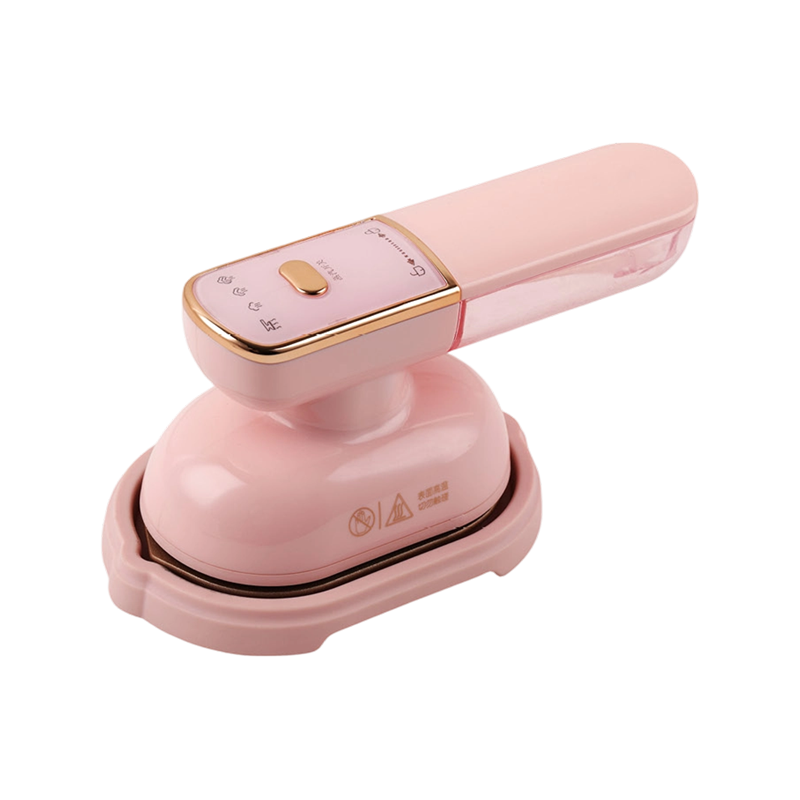
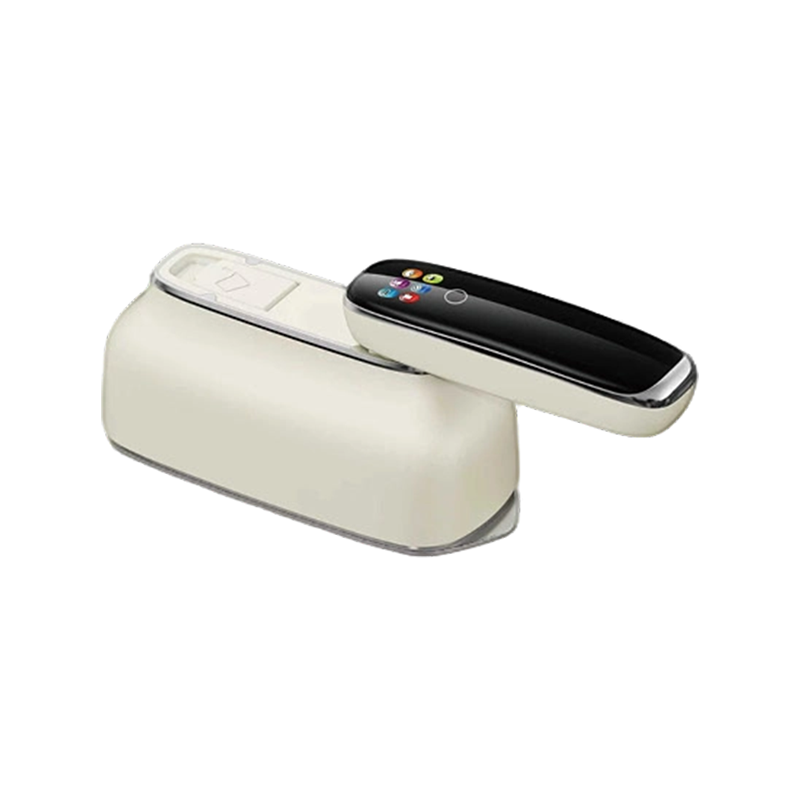 4 Steam Level Rotatable Garment Steam Iro MW-819FTouchscreen Steam Iron with 180° Rotating HandleView Product →
OEM, Certification and Export Details That Move the Price
Once the specification is fixed, the quotation usually shifts on three factors: tooling, certification and packaging. A manufacturer that already holds ISO 9001 and BSCI system certificates, and whose models carry CE, GS, CB, ROHS, ERP and PAHs approvals, can usually move faster on European orders because the test reports already exist. A supplier without those documents will quote a lower unit price and then add testing costs, which often erases the saving.
Steam structure is the second lever. A single row of steam holes is cheaper to mould and easier to seal, while a double row layout spreads steam across a wider band and cuts the number of passes on a large garment. For buyers selling into markets where customers iron heavy cotton and linen, the double row design usually justifies its slightly higher cost. Panel material works the same way: a stainless steel panel resists scratching over a long service life, while an aluminium panel heats faster and costs less.
Finally, ask how the factory handles dual voltage, plug standards and language on the control panel, because these details decide whether one model can serve several markets or whether you need separate versions. Reviewing the company background before you shortlist is a quick way to check factory size, certification scope and export experience in one place.
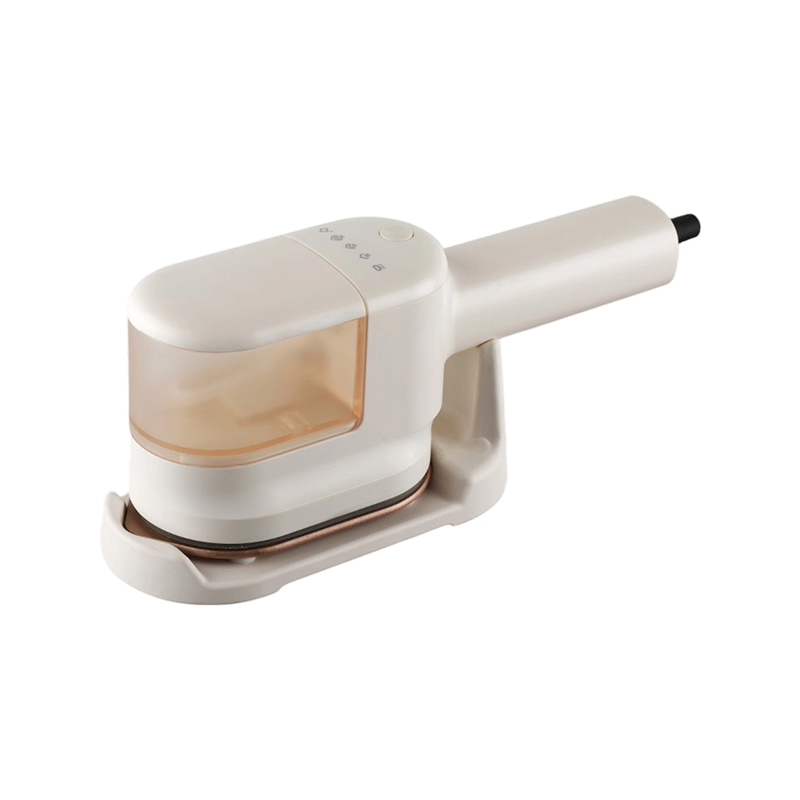
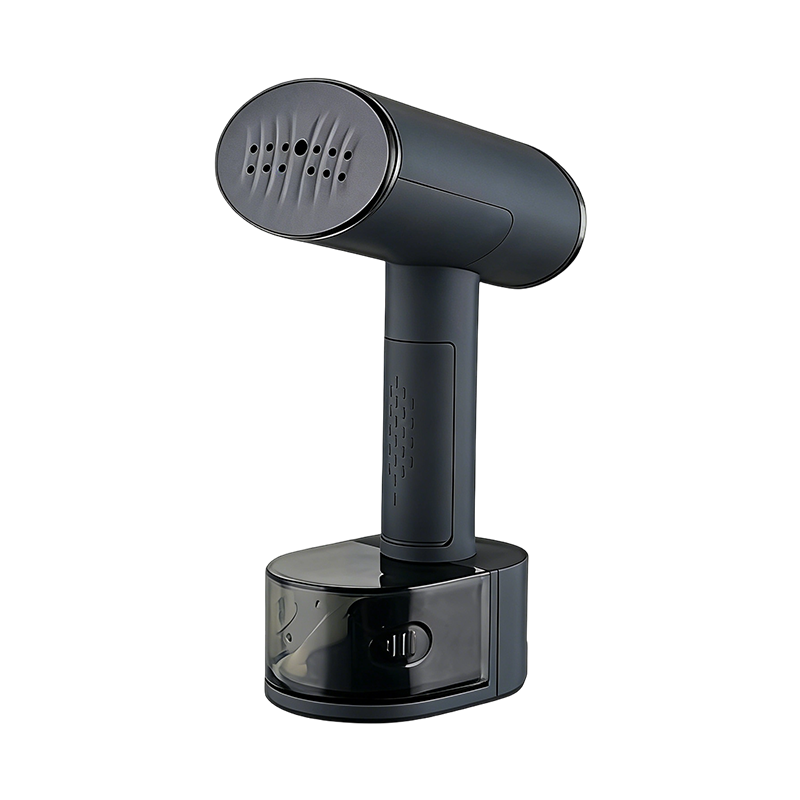 Powerful Double-Row Steam Holes Handheld Garment Steamer MW-820 MW-820E MW-820FMW-820F is without the function of Auto-shut off and No water prompt.View Product →
Keeping a Pressurised Iron Working
Most high pressure units that fail early were killed by water, not by use. Mineral scale builds on the heating element and inside the boiler, and it reduces steam output long before the machine stops working completely.
Three habits extend service life. First, use distilled or demineralised water where the local supply is hard, and never add starch or fragrance directly to the tank unless the manual allows it. Second, empty the reservoir after every session instead of leaving water to sit and concentrate. Third, run a descaling cycle at the interval the manual specifies, which for daily household use is usually every four to six weeks.
Buyers placing volume orders should also confirm that seals, valves and tanks are available as spare parts, because a two dollar seal is often the only thing standing between a working unit and a warranty claim. A short spare parts list in the packaging insert reduces support calls noticeably.
A high pressure steam iron earns its place when a customer needs speed on heavy fabric and long sessions without refilling. The decision comes down to four numbers that should always be checked together: working pressure in bar, sustained steam output in grams per minute, tank capacity and heat up time. Pressure alone tells you very little, and it is the easiest specification for a supplier to inflate. Fix the four numbers first, then compare certifications, spare parts and packaging support. That order keeps the comparison honest and keeps the first shipment out of the claims file.
For exclusive deals and latest offers, sign up by entering your email address below.