русский
 Français
 한국어
 عربى
 Español
 中文简体
steam iron with anti drip: Applications, Selection Criteria, and Practical Guidance
Admin 2026-10-30Content
- 1 What an Anti-Drip System Actually Does
- 2 Why It Matters More to Export Buyers Than to End Users
- 3 Anti-Drip Compared With Related Water Controls
- 4 What to Check on a Sample Before You Place an Order
- 5 Design Details That Support or Undermine the Valve
- 6 Sourcing Considerations for OEM Programs
- 7 Common Failure Modes and How to Raise Them With a Supplier
- 8 Matching the Feature to the Market
A shipment leaves the factory with no defects logged, and three weeks later the complaints arrive: pale water marks across a silk blouse, a spotted shirt collar, a customer convinced the iron is leaking. Nothing was broken. What failed was the anti-drip valve's behaviour against a cold soleplate, and in a retail channel that single component can decide whether a model earns repeat orders or a return rate nobody can explain to the buyer.
Anti-drip is not a sticker feature. It is a mechanical link between the thermostat and the water valve, and it should be verified on samples rather than trusted from a specification sheet. What follows covers how the system works, where it fails in the field, and what to check before a purchase order is issued.
What an Anti-Drip System Actually Does
Water only becomes steam when it meets metal that is hot enough. On a soleplate sitting at 90 C, a drop of water does not flash into vapour; it spreads, picks up mineral dust from the chamber, and leaves through the steam holes as a brownish trickle. That is the stain customers photograph and send back with the review.
The anti-drip valve sits between the tank and the vaporisation chamber. On most handheld and two-in-one designs it is a spring-loaded plunger held closed by a bimetallic actuator or a thermostat signal, and it opens only once the soleplate passes the steam-ready threshold. Depending on the design and the target market, that threshold usually falls between 110 C and 130 C. Below it, the water path is physically blocked, so a cold iron can be switched on, pressed, tilted and shaken without releasing a drop.
Three situations depend on that behaviour: a cold start on a shirt taken straight from the wardrobe, a low temperature setting used on delicate fabric, and the burst steam button pressed while the chamber is still recovering. In each case, an iron without a working valve spits rather than steams.
Where the valve sits in the water path
- Tank outlet and vent, where air enters to replace the water leaving.
- Valve seat and plunger, the anti-drip element itself.
- Metering orifice, which sets the flow rate into the chamber.
- Vaporisation chamber and steam channel, ending at the soleplate holes.
The order matters. When the valve seat sits upstream of the metering orifice, a single flake of scale can hold the plunger open and the unit drips at every temperature. When the orifice comes first, the same flake causes weak steam instead, which is a complaint about performance rather than a complaint about ruined fabric.
Why It Matters More to Export Buyers Than to End Users
An end user loses one garment. A buyer loses a whole SKU, because the review page does not distinguish between one faulty unit and a design flaw. Water marks are also visually distinctive, which makes them easy to photograph and hard to explain away in a marketplace listing.
Two technical variables decide how often that happens. The first is water hardness. In markets where tap water runs above roughly 200 mg/L as calcium carbonate, scale builds on the valve seat within a few months of daily use and slowly turns a sealed valve into a seeping one. The second is voltage. A 230 V, 50 Hz unit and a 120 V, 60 Hz unit of the same model number heat at different rates, so a valve calibrated on one variant can open too early on the other. Dual voltage travel models add a third heat curve again.
There is a commercial signal as well. A genuine anti-drip assembly adds a valve, an actuator or sensor link, and calibration time at end of line. When two quotations for a similar iron differ by a wide margin, the difference is rarely labour. Ask for the water path drawing and the valve part number before discussing price.
Anti-Drip Compared With Related Water Controls
Buyers often treat every water-related feature as interchangeable. They are not, and the table below shows what each one actually protects against.
| Feature | What it protects | Typical failure |
|---|---|---|
| Anti-drip valve | Fabric, by blocking water below steam temperature | Scale on the seat, spring fatigue, actuator drift |
| Anti-calc cartridge or ball | Chamber and valve seat, by reducing mineral deposit | Never replaced by the user |
| Self-clean function | Steam output, by flushing loose scale | Does not reach scale bonded to the valve seat |
| Thermostat and thermal fuse | Safety and certification compliance | Not a water control at all |
| Auto shut-off | Safety during idle periods | No effect on dripping while the iron is in use |
What to Check on a Sample Before You Place an Order
A specification sheet will confirm that anti-drip exists. Only a bench test shows whether it works after twenty heat cycles and a month of hard water. The protocol below can be run in an afternoon with white cotton, a dark silk square and a stopwatch.
- Cold start test. Fill with water tinted by two drops of food colouring, set the dial to the steam range, and pass the soleplate over white cotton during the first 60 seconds. Zero droplets is the target; one visible drop means the valve opens early.
- Low temperature test. Select the lowest steam position and iron through a press cloth. Wet patches indicate leakage at the seat rather than condensation.
- Burst steam test. Press the burst button at 30-second intervals while the soleplate cools, and watch the holes for spitting.
- Heat cycle test. Run twenty cycles from cold to steam-ready. Drip behaviour can drift as the bimetallic actuator settles, and drift is what field returns look like.
- Hard water test. Use water at about 300 mg/L hardness for twenty fill cycles, then repeat the cold start test. This is the check most samples never see, and the one that predicts complaints in Germany, the Gulf and northern China.
- Tilt and storage test. Hold the unit at 45 degrees and shake it, then lay it on its side for an hour. A tank seal or valve gasket that weeps here will weep inside a container.
Record droplet counts and photographs, and write the same numbers into the pre-shipment inspection standard. A test that stays in a laboratory notebook does not protect the shipment.
Design Details That Support or Undermine the Valve
Several neighbouring parts decide whether a good valve stays good. The tank vent controls how evenly water reaches the seat; a vent that is too tight produces gurgling and uneven flow. The fill opening matters more than it appears, because a narrow neck encourages overfilling, and water above the maximum line can bypass the valve through the vent path. Overfilling is one of the most common user errors reported by service centres, and it is a design issue as much as a user issue.
Soleplate material plays a part too. Stainless steel resists scratching and cleans down to bare metal, while aluminium heats faster but is softer, and a scratched surface holds a mineral film that customers read as a drip stain even when the valve is sound. Steam hole layout changes how visible a small leak becomes: a double row spreads output across more fabric, so a single drip marks a wider area.
Rotating two-in-one designs add a second water path at the joint between handle and soleplate, and the valve has to seal in both the flat and the handheld position. Across the steam iron range, models such as the LCD display two-in-one rotatable unit pair a thermostat-linked valve with a rotating head, which is exactly where this dual-position sealing requirement shows up.
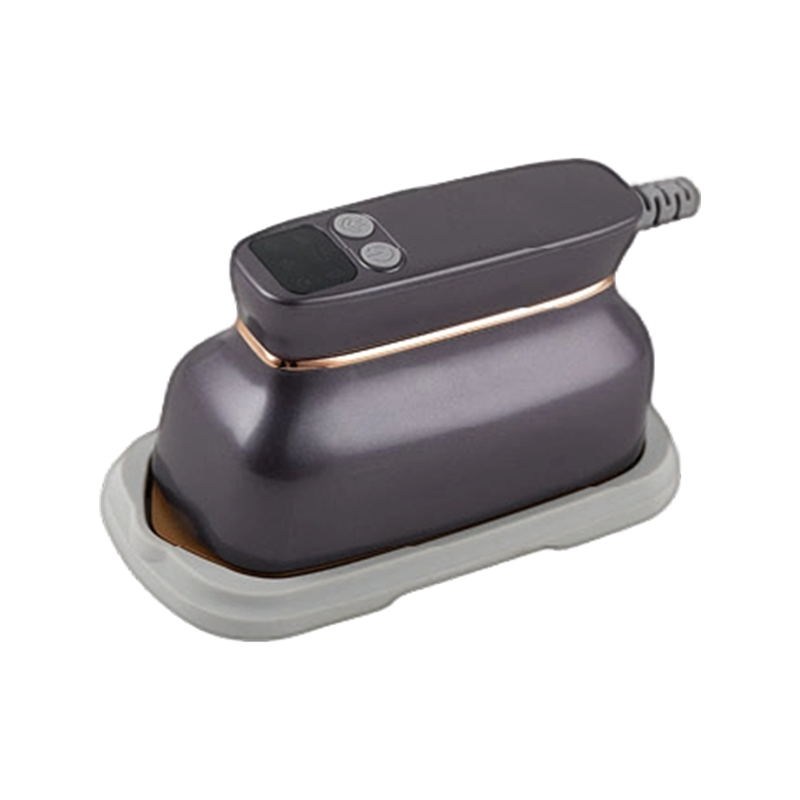 LCD Display 2-in-1 Rotatable Garment Steamer and Steam IronA rotating two-in-one unit with LCD-selected steam levels, 180° handle and 160 ml tank; check dual-position valve sealing before specifying.View Product →
Sourcing Considerations for OEM Programs
Anti-drip behaviour is not directly certified by any single mark, but the parts involved are covered indirectly. Materials in the water path fall under ROHS and PAHs declarations, and electronic display variants must meet ERP standby power limits for Europe. A supplier holding CE, GS, CB and ISO 9001 documentation can usually produce the material declarations quickly; the useful question is whether the valve part number is locked into the production file.
Silent substitution is the classic failure in this category. A valve that passed sampling is replaced by a lower-cost equivalent six months into a program, and the drip complaints start in the second season. Ask for the part number to appear in the approved sample record, and re-test on every engineering change. For OEM orders, the variant list is also worth fixing early: voltage, plug standard, cord length, panel language, packaging and carton markings all interact with the heat curve and therefore with valve calibration.
Logistics rarely cause problems on this product. Production in Yuyao sits about 60 km from Ningbo port, with road access to Shanghai across the Hangzhou Bay bridge, so a container booking is not the constraint that a valve specification is.
Common Failure Modes and How to Raise Them With a Supplier
Service data from this category is fairly consistent, and each failure points to a specific conversation.
- Scale bridging the valve seat after months of tap water use. Mitigation is a wider seat plus an anti-calc element, and a clear descaling instruction in the manual.
- Spring fatigue after several hundred heat cycles, leaving the plunger partly open. Ask for cycle test data rather than a single pass result.
- Gasket hardening. Silicone grade matters; a low-cost nitrile seal hardens and weeps within a season.
- Actuator drift, where the bimetallic strip shifts calibration and the valve opens a few degrees early.
- User behaviour: essential oils and fragrance water clog the metering orifice, and water left in the tank between uses encourages biofilm and scale.
Most of these are manageable with a documented descaling and maintenance routine, which is also a useful insert card for the retail box and a low-cost way to reduce returns.
Matching the Feature to the Market
The same valve specification will not suit every destination. Hard water markets need anti-calc protection alongside anti-drip, or the seat will scale regardless of how well it was calibrated. Cold-climate markets notice cold start behaviour most, because users tend to iron a garment immediately after switching on. Travel retail demands dual voltage, which means two heat curves in one housing and a valve that behaves correctly on both.
- Europe: GS and CE documentation expected, ERP limits for display models, and hard water in several major markets makes anti-calc a practical necessity.
- Gulf and Middle East: very hard water, so seat design and descaling guidance carry more weight than display features.
- Russia and CIS: 220 to 230 V supply, with demand for robust mechanical controls and clear maintenance instructions.
- South America: 127 V in Brazil against 220 V elsewhere, so valve calibration must be confirmed per variant rather than per model family.
Multi-mode units complicate this further, because each ironing mode runs a different steam duty cycle. A model with several modes, such as the multiple ironing modes unit below, needs its valve verified in every mode rather than only the default one.
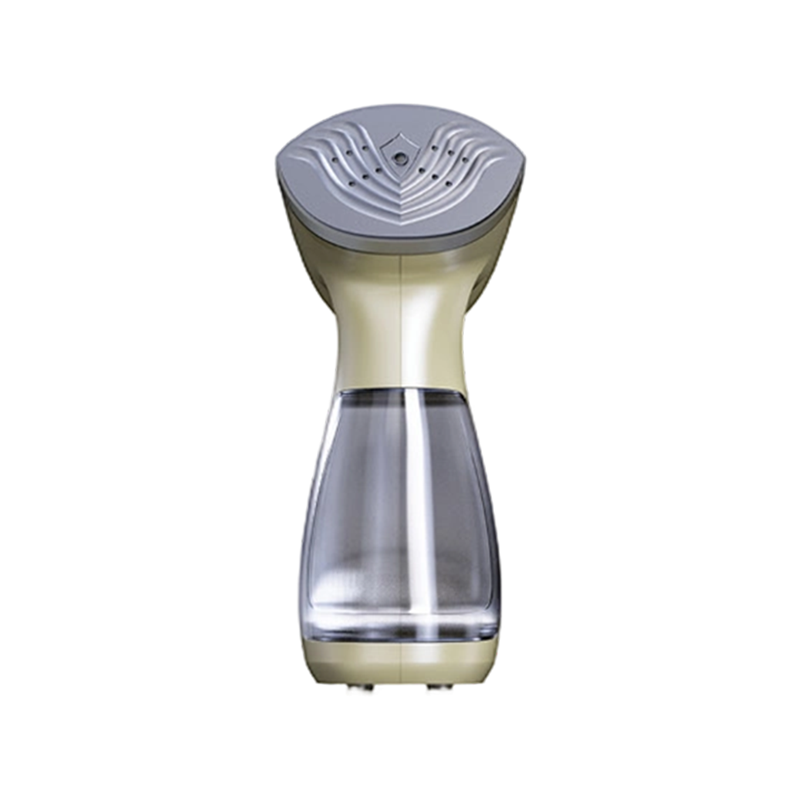 Multiple Ironing Modes Garment Steamer with Knob ControlA 260 ml, 2000 W steamer with knob-selected modes and anti-drip protection; verify valve performance across each steam duty cycle.View Product →
The specification line worth arguing over is not whether anti-drip is listed, but the temperature at which the valve opens, the water hardness the seat tolerates before it seeps, and the part number locked into production. Confirm those three points on a sample with dyed water and a hard water cycle, write the results into the inspection standard, and the return rate conversation becomes a technical one instead of a negotiation about blame.
For exclusive deals and latest offers, sign up by entering your email address below.