русский
 Français
 한국어
 عربى
 Español
 中文简体
Types of Steam Irons Explained: Flat, Handheld, 2-in-1 and Travel Models
Admin 2026-11-13Content
- 1 The Short Answer: Five Steam Iron Families
- 2 Flat Steam Irons: The Soleplate Standard
- 3 Steam Generator Irons: A Boiler Apart
- 4 2-in-1 Rotatable Steam Irons: One Body, Two Angles
- 5 Handheld Garment Steamers: Vertical Steam Without Pressure
- 6 Travel and Portable Steam Irons: Voltage Is the Real Spec
- 7 Side-by-Side Comparison
- 8 What Buyers Should Specify Before Ordering
- 9 Sourcing Notes for Private Label Programs
A single container can hold five machines that all ship under the same product description. On paper they are steam irons. In use, one presses a cotton shirt flat on a board, one refreshes a wool coat while it hangs on a rail, one folds into a suitcase, and one needs a few minutes before it produces its first useful puff of steam. The differences come from where the steam is generated, how it leaves the appliance, and whether the fabric is pressed or only treated with vapour. Sorting the category by those three points is the fastest way to match a product to a market.
The Short Answer: Five Steam Iron Families
Steam irons divide into five practical families, and each family solves a different ironing problem:
- Flat steam iron: heated soleplate with a built-in tank, used on an ironing board for pressing and steaming.
- Steam generator iron: a separate boiler delivers pressurized steam continuously for high volume pressing.
- 2-in-1 rotatable steam iron: the body rotates so the same unit works flat on a board or vertical on a hanger.
- Handheld garment steamer: vertical steam only, with no pressing weight behind the head.
- Travel and mini steam iron: reduced size and tank, often dual voltage and foldable for a suitcase.
Most retail ranges are built from two or three of these families. A full catalogue, such as the Mayway steam iron range, usually covers all five because export markets differ in fabric mix, household space and price expectations.
Flat Steam Irons: The Soleplate Standard
The flat steam iron remains the reference design: a heating element cast into or mounted against the soleplate, a thermostat holding the set temperature, and a tank of roughly 200 to 350 ml feeding steam through a drip valve or a small pump. Power usually sits between 1200 W and 2000 W. Standard features include a steam burst, a water spray, an anti-drip valve, a self-clean cycle and a vertical steam function that works best on hanging curtains rather than on a suit jacket.
Its strengths are crease quality and cost. Pressure plus heat plus moisture sets a sharp edge on cotton and linen, which no upright steamer can match. The limits are equally predictable: refilling mid-basket, a unit weight that tires the wrist during long sessions, and scale build-up in hard water areas. Understanding how a steam iron generates and releases steam explains why the vertical mode of a flat iron is weaker than its board work: the water feed relies on gravity and a small valve, not on pressure. This family suits mass retail, hospitality purchasing and any household that owns an ironing board.
Steam Generator Irons: A Boiler Apart
A steam generator moves the water reservoir and the heating chamber into a base station, then feeds the iron through a flexible hose. The hand piece becomes light, and steam arrives at pressure for minutes at a time instead of in short bursts. Tanks of one to two litres mean a full basket of shirts on one fill, and the higher steam rate shortens the time spent per garment, which is why tailoring shops and large households favour the format.
The trade-offs are real. The station occupies board space, heat-up typically runs two to three minutes, the price band sits well above a flat iron, and the boiler needs descaling on a schedule tied to local water hardness. For a buyer, the specification points that matter are the working pressure, the continuous steam rate in grams per minute, the descaling design, and whether the hose and connectors survive repeated coiling.
2-in-1 Rotatable Steam Irons: One Body, Two Angles
The rotatable design solves a space problem. The handle turns through roughly 90 to 180 degrees, so the soleplate faces down for board pressing or forward for vertical steaming, and a lock keeps the head fixed in each position. Steam levels usually run from two to four, and the upper models add LED or LCD readouts and touch controls for temperature and steam.
This is the family where specification discipline pays off. Check the rotation lock for play after repeated cycling, confirm the tank position so water does not spill when the body is turned, and test whether the steam path continues without spitting during the change of angle. The Mayway MW819, for example, pairs a rotatable body with an LCD display, which is useful for markets where visible temperature feedback supports a higher retail price.
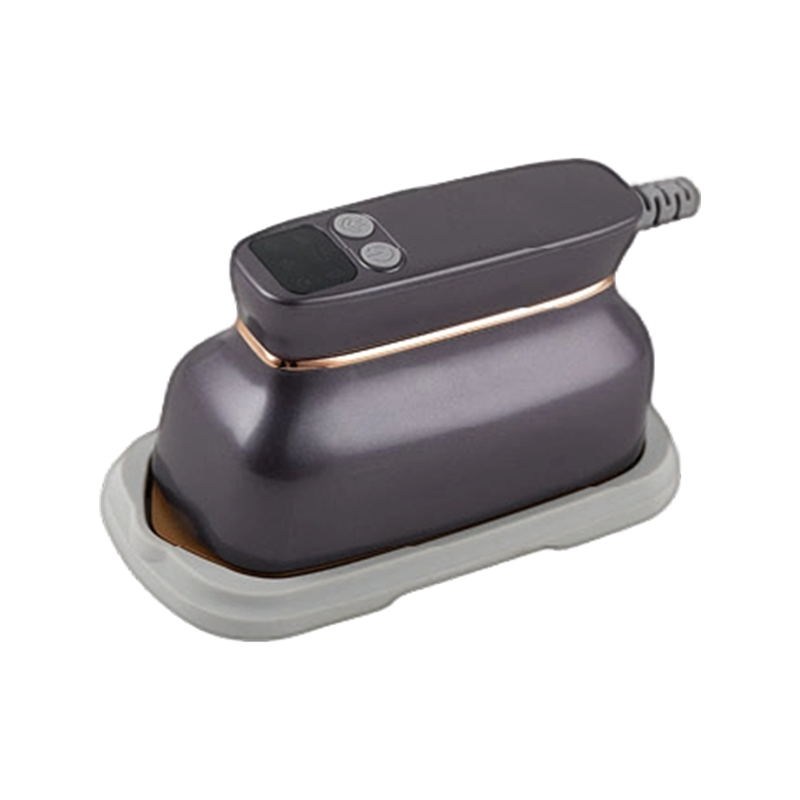 MW-819 LCD 2-in-1 Rotatable Garment Steamer and IronRotatable 2-in-1 steamer and iron with LCD steam levels, 160 ml detachable tank, and large constant-temperature panel for vertical or horizontal fabric care.View Product →
Best fit: small apartments, mixed fabric wardrobes, gift and travel retail, and buyers who want one SKU covering two use cases.
Handheld Garment Steamers: Vertical Steam Without Pressure
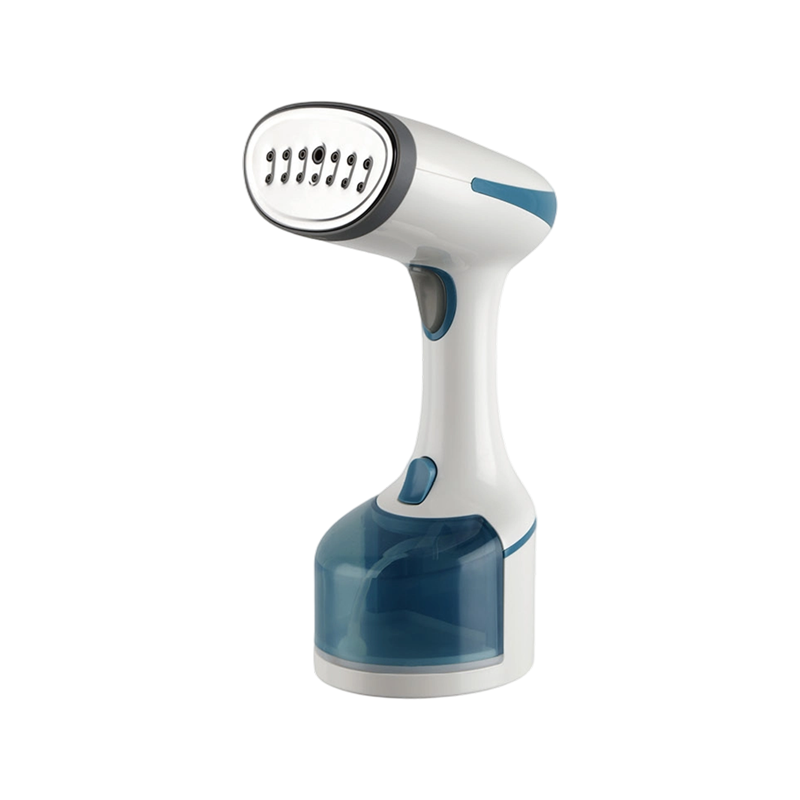
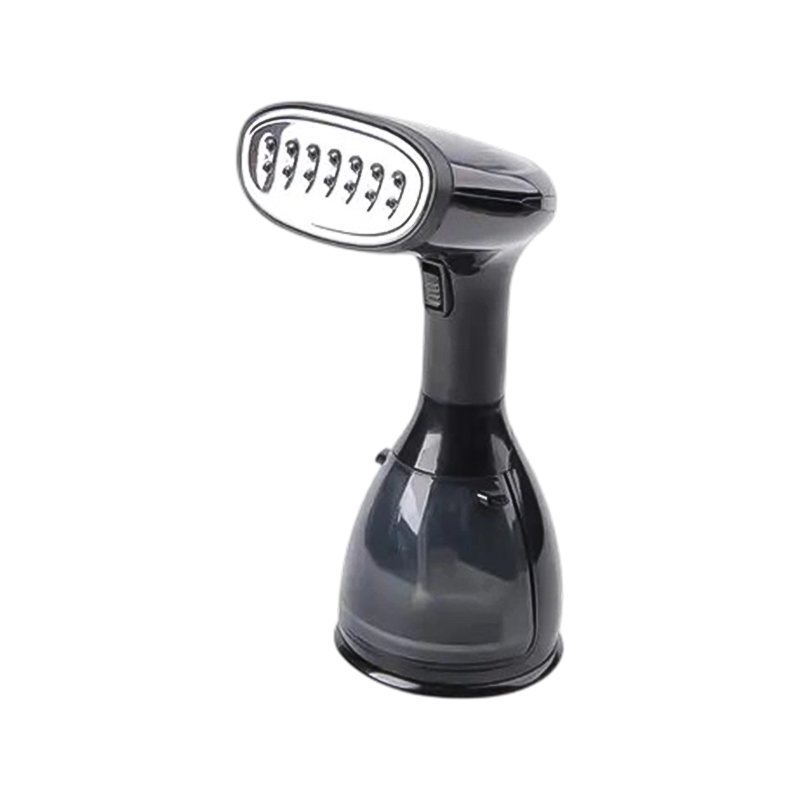
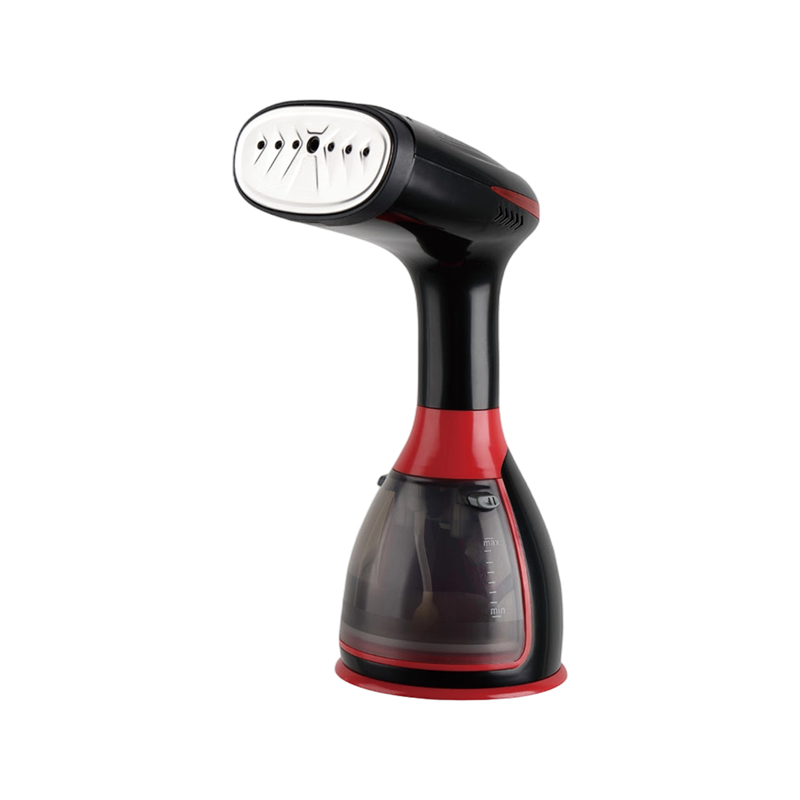
Handheld steamers drop the soleplate pressure entirely. A pump pushes water into a small heating chamber and steam leaves through a panel of holes, so the fabric is relaxed by heat and moisture rather than flattened by weight. Typical builds run from 1000 W to 2000 W with tanks between 90 ml and 350 ml, panels in stainless steel or aluminium, and heat-up that is short enough for a last-minute check before leaving the house.
Two construction details separate good units from average ones. First, the panel material, since stainless steel resists scratching better while aluminium spreads heat faster and costs less. Second, the steam hole layout: a double row of holes covers a wider band per stroke and reduces the number of passes over a shirt back.
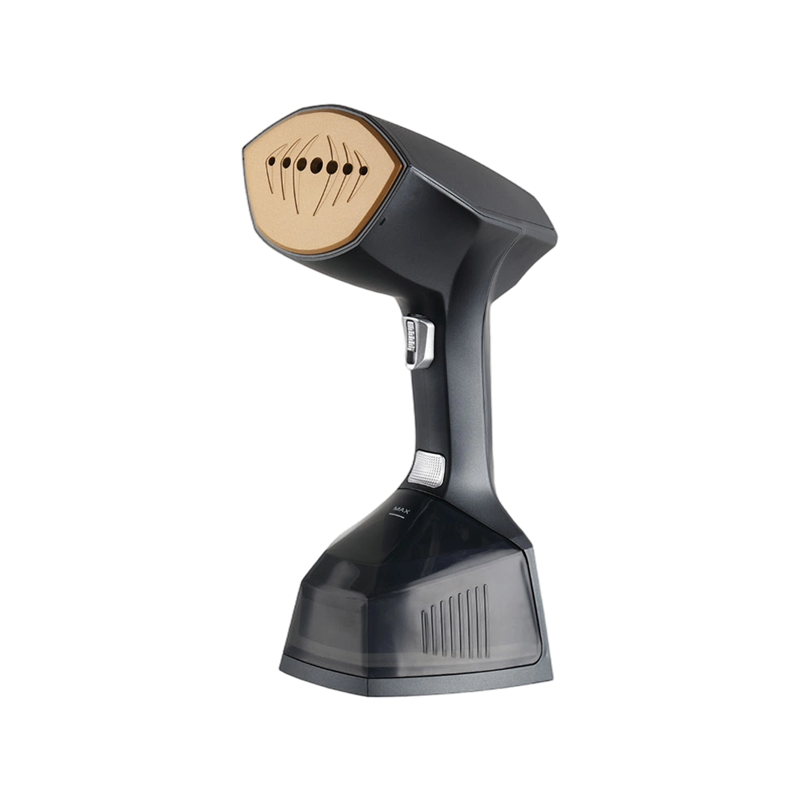
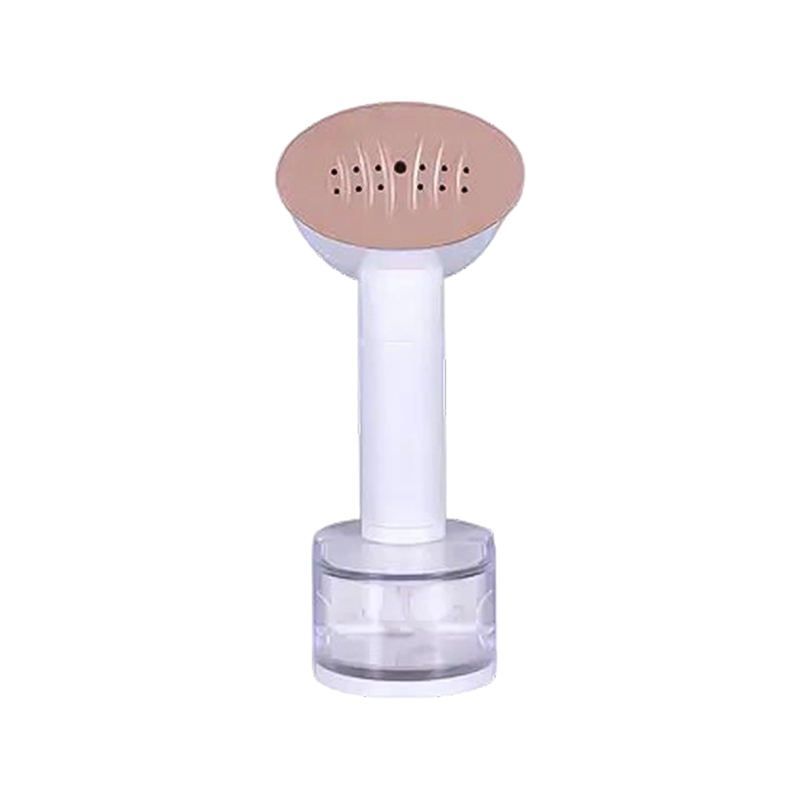 MW-820 Double-Row Steam Holes Handheld Garment SteamerHandheld steamer with double-row 13-hole steam vent, 300 ml tank, three steam levels and aluminum Teflon-coated soleplate for wide, even coverage.View Product →
This family suits wool, silk blends, knitwear, curtains and upholstery, and it is the practical answer for anyone who never sets up a board. It is not the right tool for sharp creases in cotton shirts, and honest product copy should say so.
Travel and Portable Steam Irons: Voltage Is the Real Spec
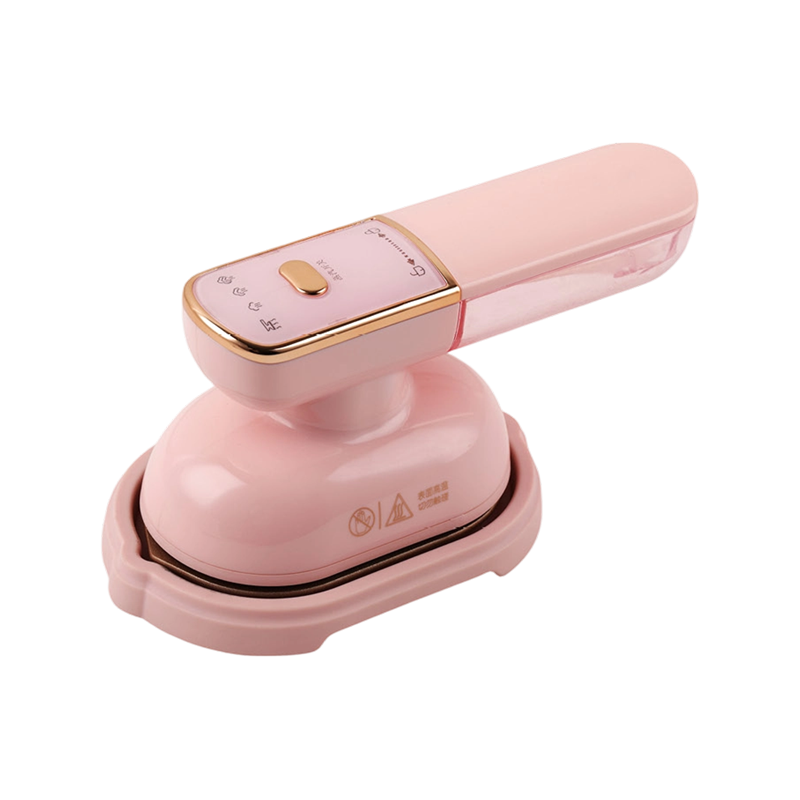
Portable models compress the whole system into 90 to 150 ml of water, a foldable handle and a heating block that reaches working temperature quickly. The decisive specification is not size but voltage. A dual voltage unit switches between 100 to 120 V and 220 to 240 V, either manually or automatically, and that single feature determines whether one SKU can serve a European retailer, a North American travel chain and an Asian airline programme.
Also check the current draw: a 1200 W unit on a 120 V supply pulls around 10 A, which is close to the limit on some older hotel circuits. Foldable handles reduce packed volume, but the hinge is a mechanical wear point and should be cycled in the sample test.
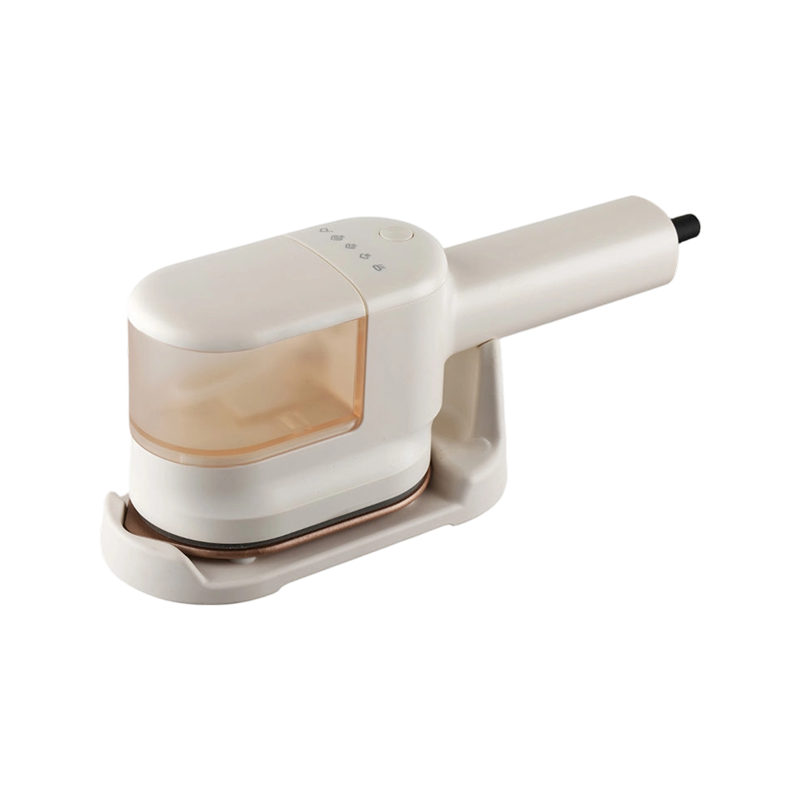
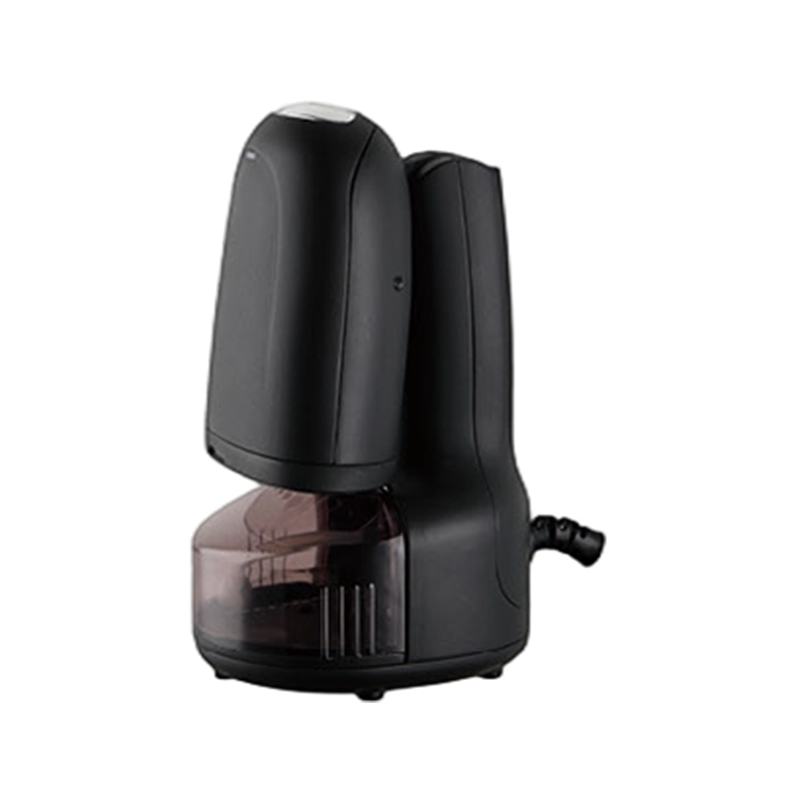 MW-829/MW-829D Foldable Travel Garment SteamerPortable foldable steamer with 230 ml detachable tank and dual-voltage MW-829D option, suited to travel and compact storage with one steam level.View Product →
Travel irons sell on portability, so packaging, plug options and the clarity of the voltage switch matter as much as the steam rate.
Side-by-Side Comparison
| Type | Steam source | Best suited to | Typical power | Main trade-off |
|---|---|---|---|---|
| Flat steam iron | Heated soleplate with drip or pump feed | Cotton, linen and shirts on a board | 1200 to 2000 W | Refilling and scale build-up |
| Steam generator | Remote boiler, pressurized delivery | High volume pressing, tailoring | 2200 to 3000 W | Price, footprint and descaling |
| 2-in-1 rotatable | Soleplate plus vertical steam path | Small homes, mixed fabrics, travel retail | 1000 to 1600 W | Rotation joint is a wear point |
| Handheld garment steamer | Pump-fed vertical steam, no pressing plate | Wool, silk blends, curtains, quick refresh | 1000 to 2000 W | Cannot set sharp creases |
| Travel and mini | Small heating block, low tank | Suitcases, hotel rooms, sample kits | 1000 to 1200 W | Short run time per fill |
What Buyers Should Specify Before Ordering
Power and steam output
Wattage is a rough proxy, not a promise. Ask for the steam rate in grams per minute at the highest setting, plus the time to first steam and the recovery time after a continuous burst. Two 1500 W units can differ noticeably once the chamber cools after the first minute of use.
Tank capacity and refill design
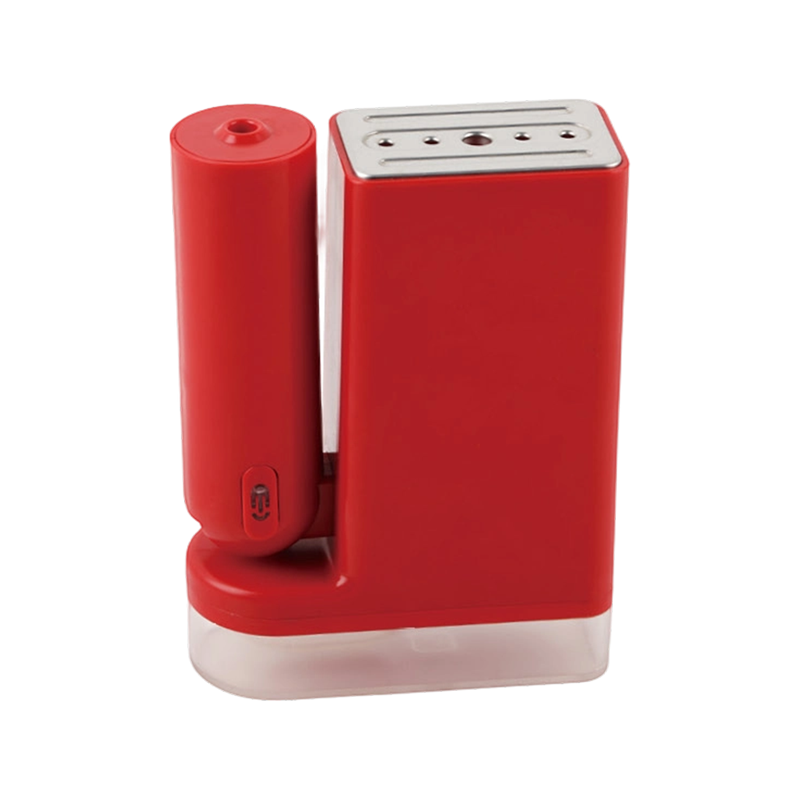
Match capacity to the use case: 90 to 150 ml for travel, 250 to 350 ml for a family handheld, larger again for a station. A detachable tank such as the MW812 design speeds refilling and reduces spills, while a fixed tank lowers tooling cost and leak risk.
Soleplate and steam hole layout
Stainless steel resists scratching and suits premium positioning; aluminium is lighter and cheaper. Single row steam holes concentrate output, double row holes spread it across a wider band. Neither is better in absolute terms, but the choice should match the fabric mix of the target market.
Controls and displays
Mechanical buttons are the lowest cost and the lowest service risk. LED and LCD panels lift perceived value, and touch interfaces look modern on a shelf, but they add cost and require tighter sealing checks because steam and humidity sit only centimetres away.
Certification by destination
For Europe, confirm CE together with GS, CB, ROHS, ERP and PAHs documentation, and check that each certificate names the exact model and voltage variant. A certificate issued for a 220 to 240 V unit does not cover a 100 to 120 V derivative.
Sourcing Notes for Private Label Programs
Once the family is chosen, the evaluation protocol decides the outcome. A practical sample test includes fifty garments across at least four fabric types, a drip check immediately after rotating or tilting the unit, a drop test from packing height, a scale test using water at the hardness of the destination market, and a full thermal cut-out check. Record steam rate and recovery time on the same bench for every sample so the numbers are comparable.
For OEM buyers, three commercial questions sit alongside the technical ones: whether the housing and steam path tooling is exclusive to the order, how the factory handles model overlap between customers, and which certifications are held by the factory rather than borrowed from a component supplier. Mayway, based in Yuyao with a factory of 8000 square metres and a site 60 km from Ningbo port, works as an OEM manufacturer of garment steamers and steam irons and holds ISO 9001 and BSCI system certification.
The useful question is never which type of steam iron is best. It is which combination of steam source, form factor and voltage fits the fabric mix, floor space and price ceiling of the market being served. Answer that first, and the specification sheet almost writes itself.
For exclusive deals and latest offers, sign up by entering your email address below.